AI is not a large-company play. It is the greatest competitive equalizer small-cap companies have ever received. Here is why...
A practical guide to understanding how AI actually impacts your investor story, operations, and market positioning without getting lost in hype.

AI is not a large-company play. It is the greatest competitive equalizer small-cap companies have ever received. Here is why...

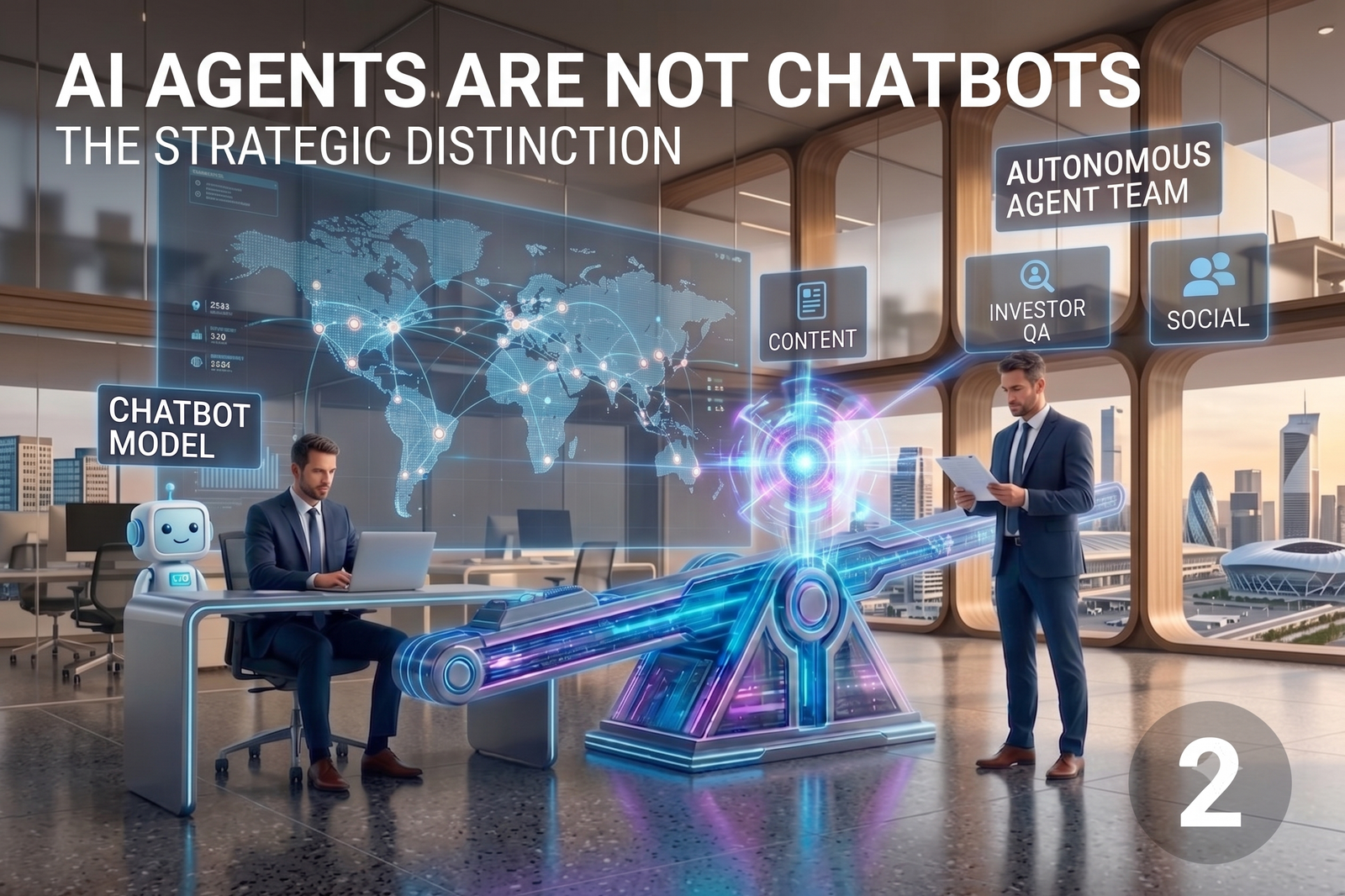
The difference between AI chatbots and AI agents is the difference between a tool that answers questions and a system...

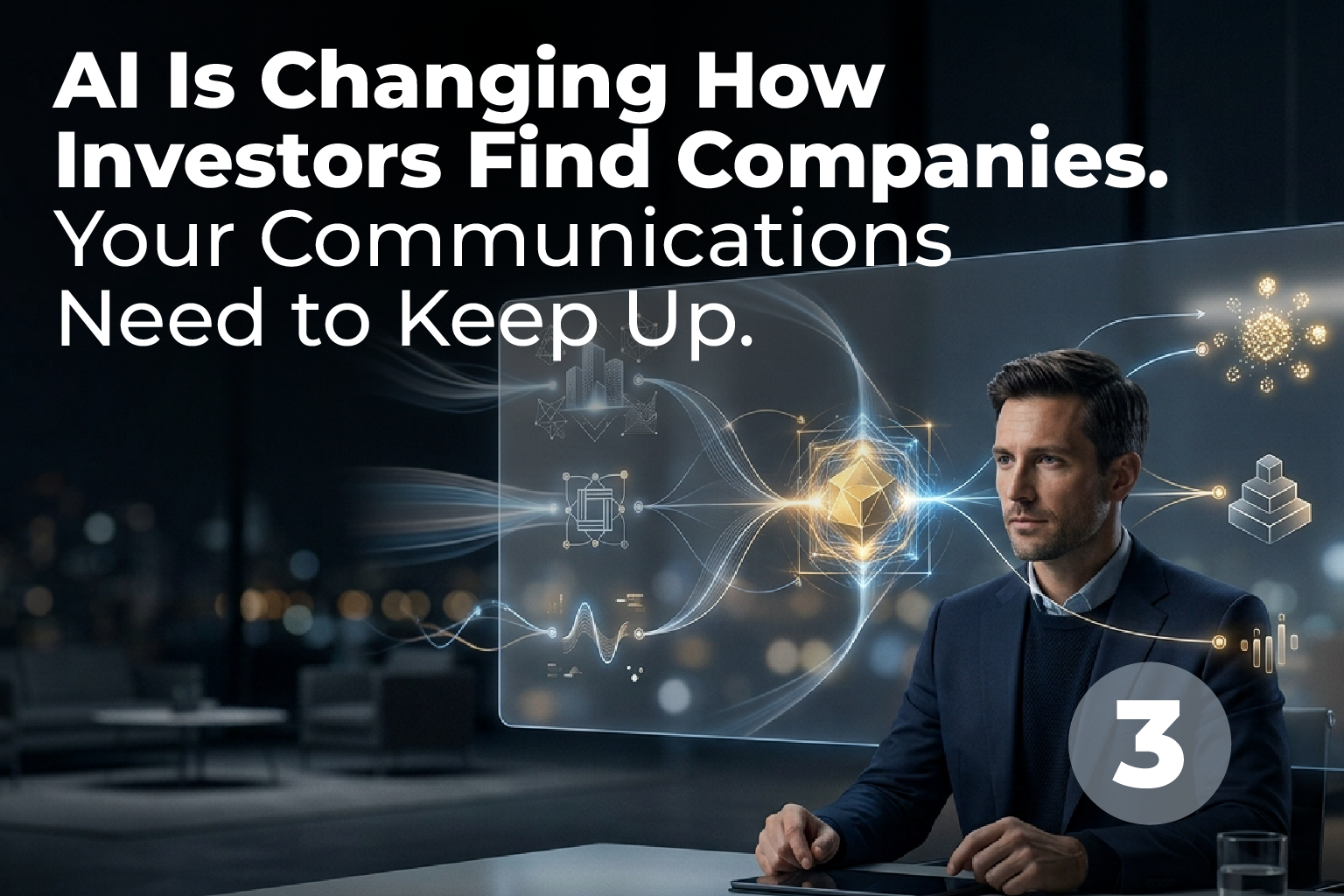
Investors are using AI to screen, research and evaluate public companies faster than ever. The companies that adapt their communications...

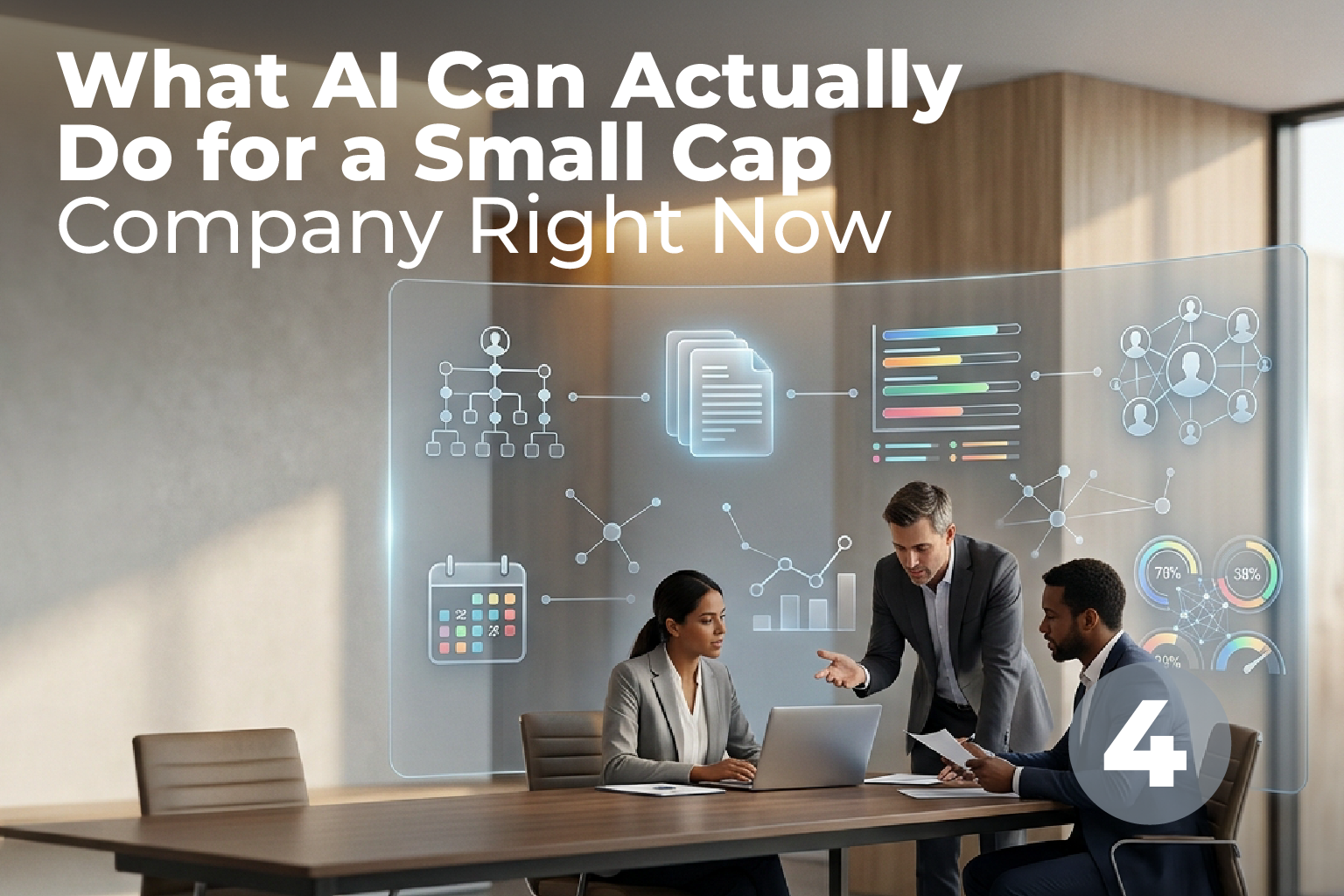
AI capabilities for small-cap companies are not theoretical. From content production to investor engagement to compliance support, here is what...

The governance framework for using AI responsibly in a public company is simpler than most CEOs expect. Here is a...
If you are a small cap CEO, you have probably felt it already. AI is everywhere. It is in investor calls, boardroom conversations, market headlines, and strategic planning sessions. The challenge is not hearing about AI. The challenge is knowingwhat actually matters for your company.
That is where most leaders get stuck. There is too much noise, too much jargon, and too many opinions that do not translate into action. The real question is not whether AI is important. The real question is how it changes your company’s story, execution, and positioning in a market that is paying attention.
A lot of CEOs still think about AI like a tool. Something to add later. Something tactical. But the market often interprets AI as a signal of leadership quality, scalability, efficiency, and future readiness. That means investors are not only asking whether you use AI. They are also asking whether your business becomes stronger, clearer, and more competitive because of it.
In other words, AI is not only operational. It is reputational.
The biggest problem is not using AI incorrectly. The biggest problem is communicating it poorly. Some companies exaggerate it and lose credibility. Others bury it and lose relevance. Both outcomes are costly.
If your investor story cannot explain where AI fits, why it matters, and what it improves, the market starts filling in the blanks for you. And markets are rarely generous when they have to guess.
AI can help create more structured, more consistent, and more scalable communication. That includes content, investor education, and clarity of message. Better communication leads to better understanding, and better understanding creates confidence.
Small teams can now produce content with a speed and polish that used to require much larger budgets. That changes how often you can show up and how effectively you can explain your business.
AI can reduce friction across research, reporting, operations, content workflows, and strategic preparation. That may not always be visible from the outside immediately, but over time it affects execution quality and leadership capacity.
They will be the ones who understand where AI fits strategically, communicate it clearly, and apply it consistently. This is not about becoming an engineer. It is about becoming a more effective leader in an AI driven market.
The companies that gain attention will not necessarily be the ones talking the most about AI. They will be the ones that make the clearest case for why it matters inside their business.
Ask CEO Sherpa your question and get a guided answer built for the reality of small cap leadership.
A practical briefing for leaders trying to make sense of AI, tokenization, and investor communication.