🎧 Listen to this article on Spotify
Welcome to CEO Sherpa and the first article in our AI School series. Whether you discovered CEO Sherpa on Day 1 of its launch, or months later as a new entrant into the AGORACOM ecosystem, we are glad you are here and have made the commitment to build an even better company through CEO Sherpa.
For most of my career, small-cap companies have operated with one unavoidable disadvantage: we have always wanted to do more than our resources allowed. We wanted better research, stronger marketing, more sophisticated financial analysis, broader business development and more time for management to actually think about the business instead of constantly putting out fires. Large companies could solve many of those problems by adding people and departments. Small companies had to make choices about what we could afford to do well and what would have to wait.
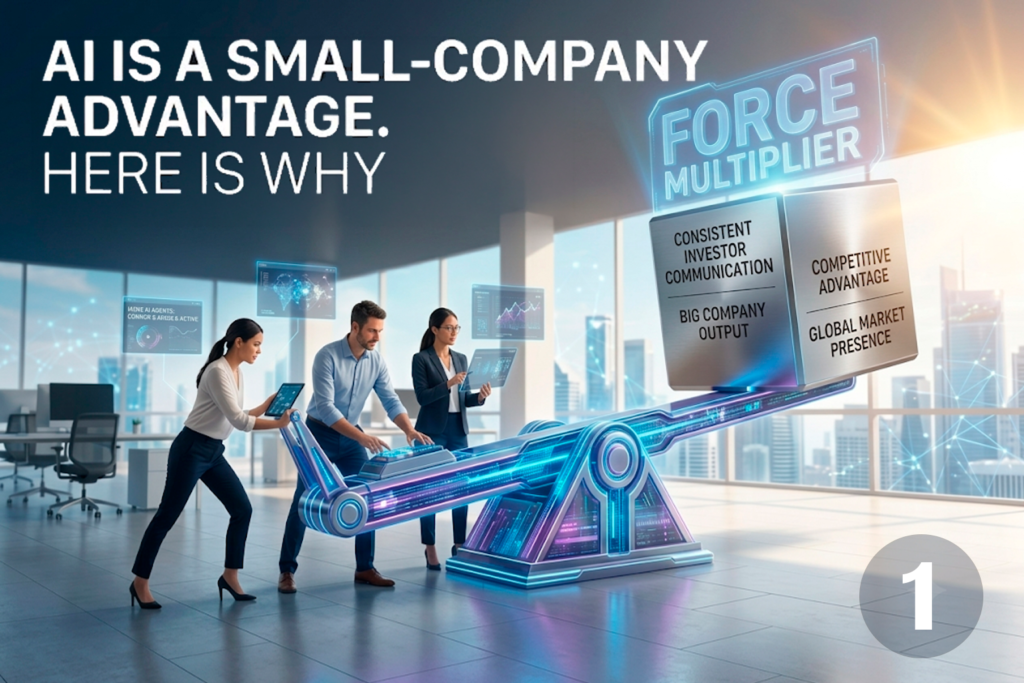
That is why I believe artificial intelligence represents such an extraordinary opportunity for companies of our size. For the first time, technology is giving smaller organizations access to capabilities that historically required much larger teams and budgets. A five-person management team can now research more deeply, analyze more information, prepare more thoroughly and execute work that would otherwise sit on a wish list for months because nobody had time to get to it.
None of this means AI will magically transform every company. But the economics of what a small company can accomplish are changing, and that is the idea I want executives to understand before we get into AI agents, specific applications or governance in the rest of this series. If you begin your AI journey from a position of fear, the rest of the conversation becomes harder than it needs to be. If you begin by asking what AI could make possible for your company, the conversation becomes far more interesting.
Start With What AI Can Do For Your Company, Not What It Might Do To It
Much of the public anxiety around AI has focused on what the technology might do to people and to jobs. Those are legitimate concerns, but they are a poor starting point for a CEO deciding what AI means for the business sitting in front of them today. A much more useful question is: what can my company do with AI that it could not reasonably do before?
Imagine being able to work through hundreds of pages of industry reports, regulatory documents and competitor information in the time it once took to review a fraction of them. Now imagine:
- Your business development team arrives at important meetings armed with full intelligence.
- Your finance team interrogates data faster.
- Your operations people find answers buried inside years of corporate documents.
- Your executives communicate with international stakeholders in their own languages.
The common thread is not replacement. It is capability. The people who understand the company, build the relationships and accept responsibility for outcomes remain critically important. What changes is the amount of intelligence and execution capacity available to them.
Small Companies Have More to Gain Than Anyone
When people discuss AI in business, the conversation naturally gravitates toward Microsoft, Google, Amazon and other enormous organizations investing billions into AI. Those companies will benefit tremendously.
But there is another side to the story that matters more to the executives reading CEO Sherpa.
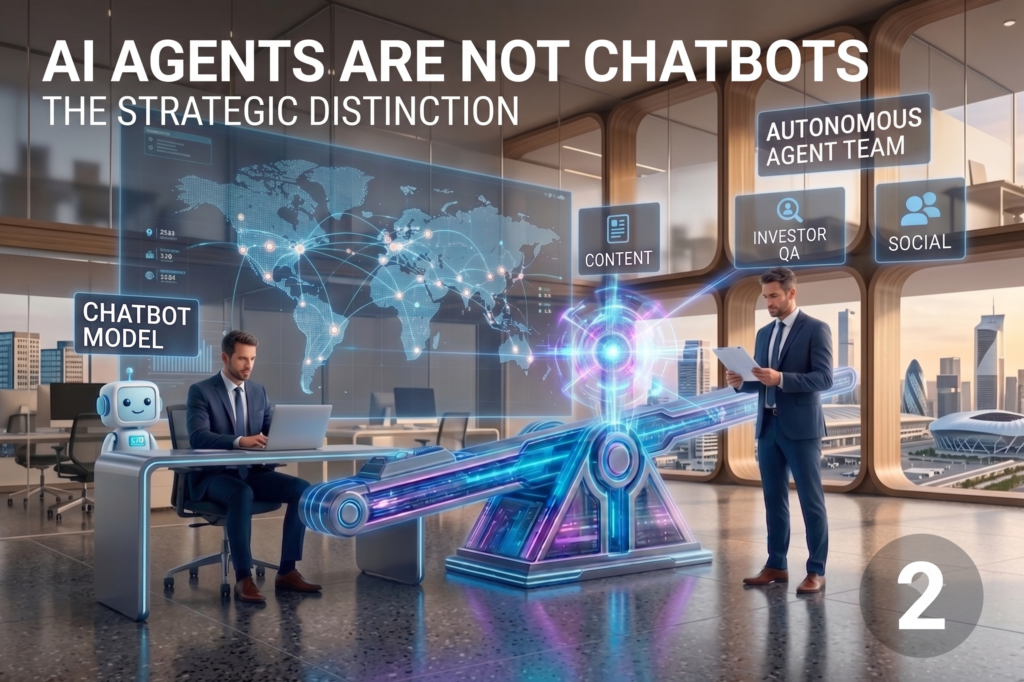
A large corporation may use AI to make an existing 200-person department more productive. A small company may use AI to gain a capability it never had in the first place. Those are very different outcomes. An emerging mining company that cannot afford a competitive intelligence department tracking hundreds of projects around the world can begin narrowing that information gap with AI. A small technology company without dedicated teams for market research, customer analysis or legal review can acquire meaningful fractions of those capabilities at a cost that would have been impossible two years ago.
I am not suggesting that installing an AI application gives you the institutional knowledge of a Fortune 500 company. Experience, relationships, data and great people still matter enormously. But if AI allows a smaller organization to acquire capabilities that were previously out of reach, the exponential improvement to that company can be far greater than what a large corporation gains from making an already enormous operation somewhat more efficient.
You Do Not Need to Become an Expert, But You Do Need to Start
You do not need to understand every AI model, technical architecture or industry announcement. You already operate this way in many areas of your business. You manage finance without understanding every line of your accounting software. You insist on cybersecurity without being a security engineer. AI should be approached the same way: understand what it can do for your company, what information it has access to, where human oversight is required and whether it is producing better business outcomes.
The easiest way to waste time is to begin with technology rather than the business. Instead of chasing whichever platform is generating excitement this month, look at where your people are overloaded, which decisions would benefit from deeper research and which processes consume expensive human time without requiring much human judgment. Those questions will lead you toward useful AI applications far more reliably than any product demonstration.
Your biggest competitive risk will not come from a multinational spending billions on AI. It will come from another company your size that commits to adopting AI. Two companies with similar assets, comparable capital and equally capable teams can diverge significantly if one begins building AI into its research, analysis, operations and communications while the other waits. That gap does not need to be dramatic to matter, and the companies that start learning now will develop organizational knowledge that compounds over time.
Artificial intelligence is not something your company should primarily be defending itself against. It is a capability your company should be learning how to use. For those of us who have spent our careers trying to accomplish more with less, that should be a very exciting prospect.